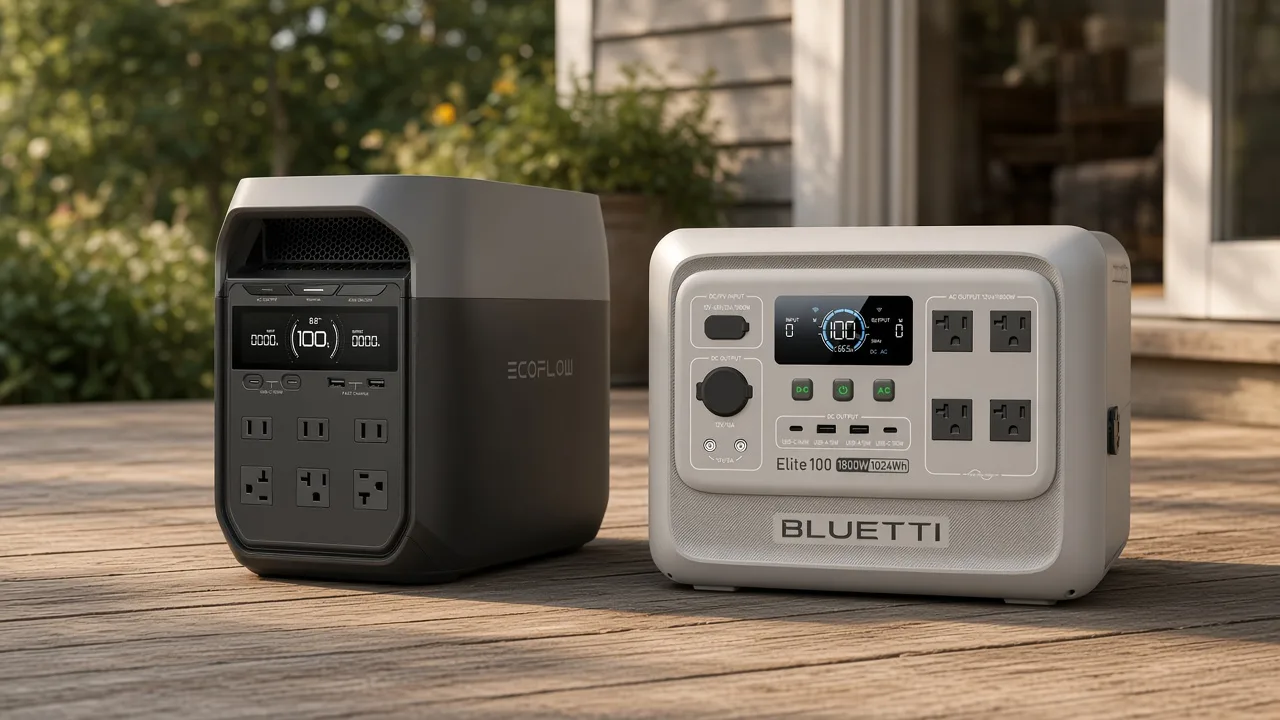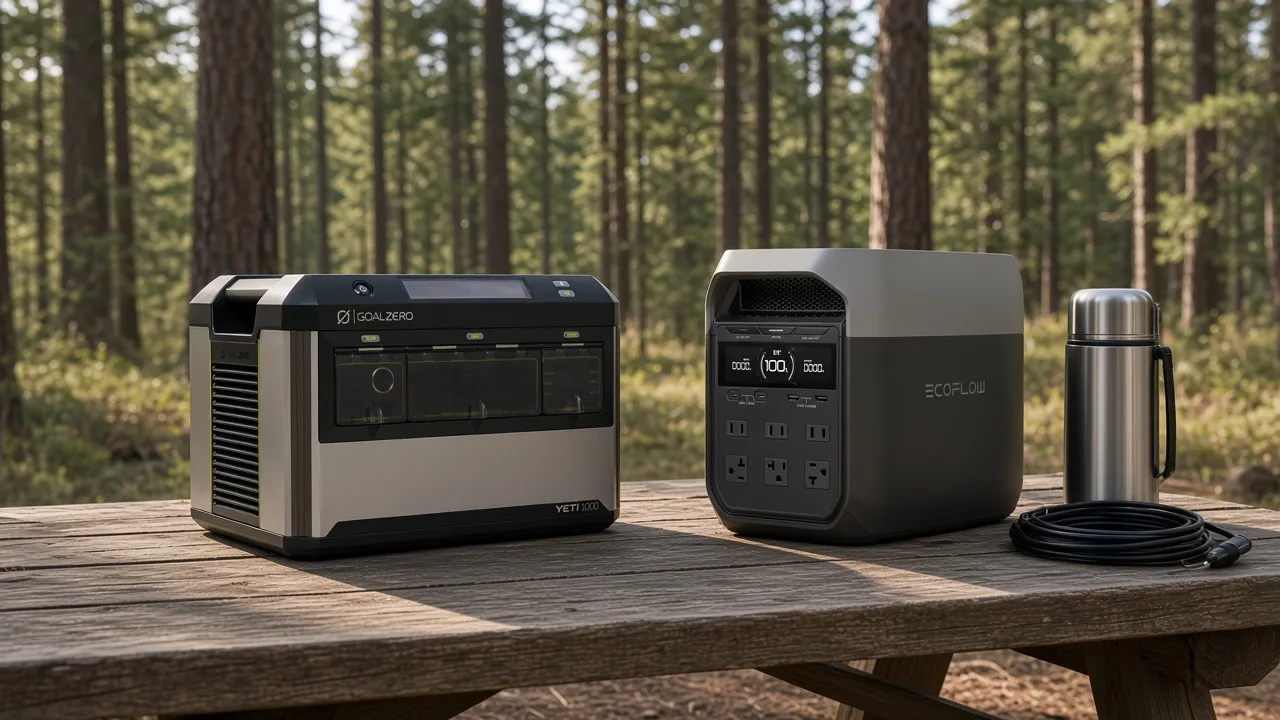
Match Goal Zero and EcoFlow by similar watt-hours first — not by the logo. In these pairs you often pay less and lift less with EcoFlow, or you get room for a second battery; near 1,000 Wh Goal Zero often prints more continuous watts or more solar input. Both brands sell LiFePO4 on the models named here.
Put the Goal Zero Yeti 1000ModelGoal Zero Yeti 10008.5 / 10998 Wh · 2,000 W · 35.3 lb · 16.01 kg · $1,199.95 next to the EcoFlow DELTA 3ModelEcoFlow DELTA 38.8 / 101,024 Wh · 1,800 W · 27.6 lb · 12.52 kg · $629.00 and you see the fork. Both sit near 1,000 watt-hours. On 2026-10-31 the Yeti was $1,199.95 and the DELTA 3 was $629 — about $571 apart. You get more continuous watts and more solar input on the Yeti (2,000 W and 900 W against 1,800 W and 500 W). You get about eight fewer pounds and an add-on battery on the EcoFlow (27.6 lb against 35.3 lb).
Does EcoFlow undercut Goal Zero near 700 Wh?
Yes — about $311 on the day we checked. The EcoFlow RIVER 2 ProModelEcoFlow RIVER 2 Pro8.7 / 10768 Wh · 800 W · 18.2 lb · 8.26 kg · $389.00 lists 768 Wh, 800 W continuous, 18.2 lb, and solar up to 220 W, at $389 (2026-10-31). The Goal Zero Yeti 700ModelGoal Zero Yeti 7008.3 / 10677 Wh · 600 W · 20.3 lb · 9.21 kg · $699.95 lists 677 Wh, 600 W continuous, 20.3 lb, and solar up to 200 W, at $699.95 the same day. You also get more continuous watts on the EcoFlow here.
What you cannot treat as a free win is the cycle line. The Yeti prints a bare 4,000; the EcoFlow prints a bare 3,000 — both leave the percent off. UPS is listed as not available on our RIVER 2 Pro page; UPS time is blank on our Yeti 700 page. Missing data is not the same as “no.” OutdoorGearLab usable AC is about 620 Wh on the EcoFlow and about 560 Wh on the Yeti. Neither box takes a second battery.
Goal Zero Yeti 1000 or EcoFlow DELTA 3?
Same neighborhood of watt-hours. If the box has to ride in the trunk and you may add capacity later, open the DELTA 3 — lower list price, fewer pounds, and room for a second battery. If panels are how you refill most days and you want the 2,000 W ceiling, open the Yeti.
Read the cycle line with the percent still on it. DELTA 3 says 4,000 to 80%; the Yeti says a bare 4,000. UPS prints under 10 ms on the EcoFlow and is blank on our Yeti 1000 page — missing data on our side, not proof the Yeti has no switchover. OutdoorGearLab usable AC for the DELTA 3 is about 870 Wh; we do not list a usable figure for this Yeti.
If your budget stops near $1,000, see the best portable power stations under $1,000ReviewBest Portable Power Stations Under $1,000Models with a brand list price of $1,000 or less on the day we checked. If we couldn't confirm the price, or it's over $1,000, it's not here. review. For a weekend camping kit near this size, see the best portable power stations for campingReviewBest Portable Power Stations for CampingCamping picks, judged on capacity, output, weight, and solar input. An outside watt-hour test appears only when we have the link. review.
Goal Zero Yeti Pro 4000 or EcoFlow DELTA Pro 3?
These stay on the floor. For a power cut at home — fridge, router, lights — you are picking stored energy and continuous watts, not something you toss in a backpack. The Goal Zero Yeti Pro 4000ModelGoal Zero Yeti PRO 40008.9 / 103,994 Wh · 3,600 W · 115.7 lb · 52.48 kg · $3,999.95 lists 3,994 Wh, 3,600 W continuous, 115.7 lb, solar up to 3,000 W, and a second battery, at $3,999.95 (2026-10-31). The EcoFlow DELTA Pro 3ModelEcoFlow DELTA Pro 39.1 / 104,096 Wh · 4,000 W · 113.5 lb · 51.48 kg · $2,799.00 lists 4,096 Wh, 4,000 W continuous, 113.5 lb, solar up to 2,600 W, UPS under 10 ms, a bare 4,000 cycles, and a second battery, at $2,799 the same day — about $1,201 less.
On price, stored energy, and continuous watts, EcoFlow is the easier open. Goal Zero still prints more solar input; the weight gap is only about two pounds. UPS time and cycle life are blank on our Yeti Pro page — missing data, not a verdict. OutdoorGearLab usable AC for the DELTA Pro 3 is about 3,790 Wh. For that outage setup, see the best portable power stations for home backupReviewBest Portable Power Stations for Home BackupHome backup picks that list expansion. We looked at capacity and continuous output. A UPS time appears only when the brand lists one. review.
| Spec | 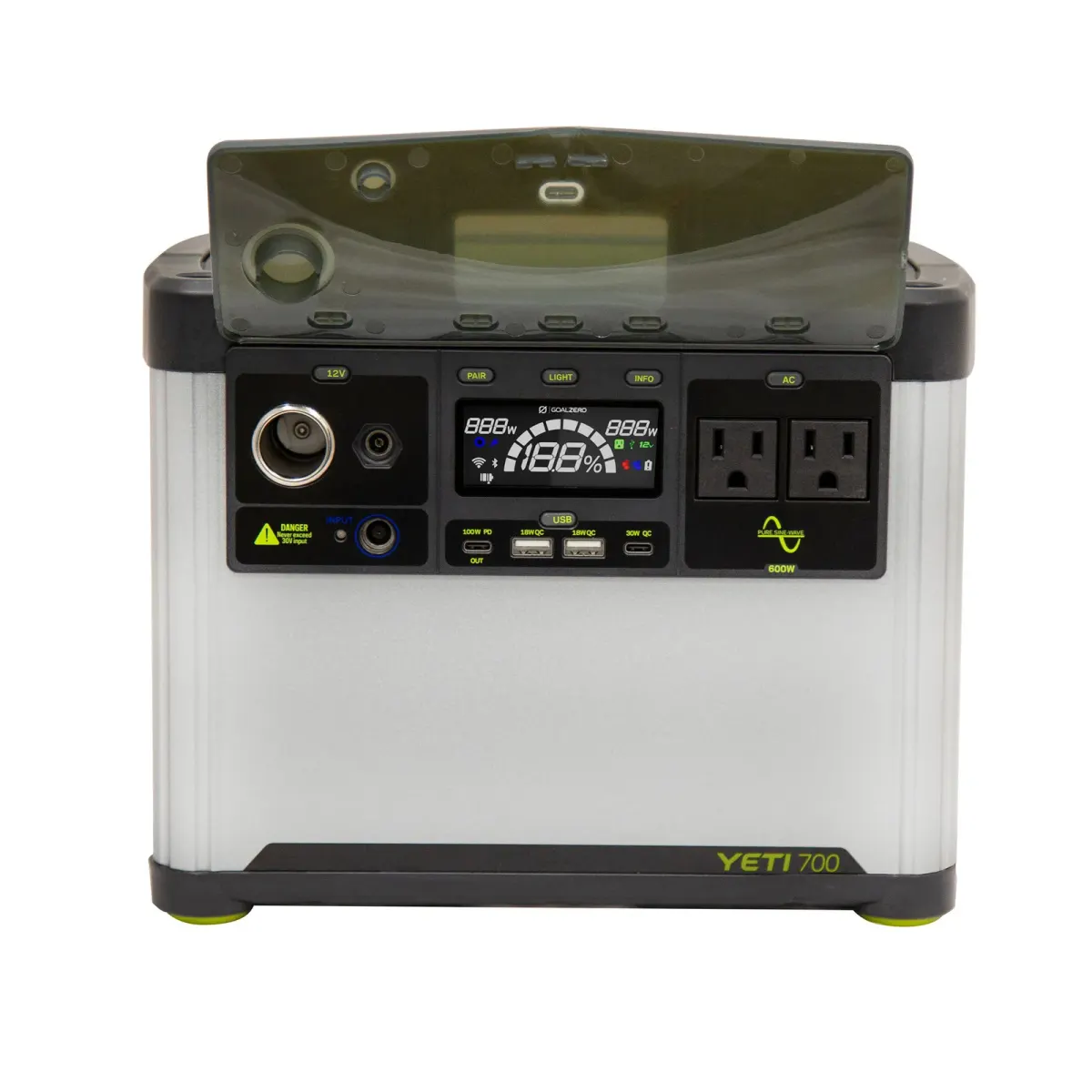 Goal Zero Yeti 700 | 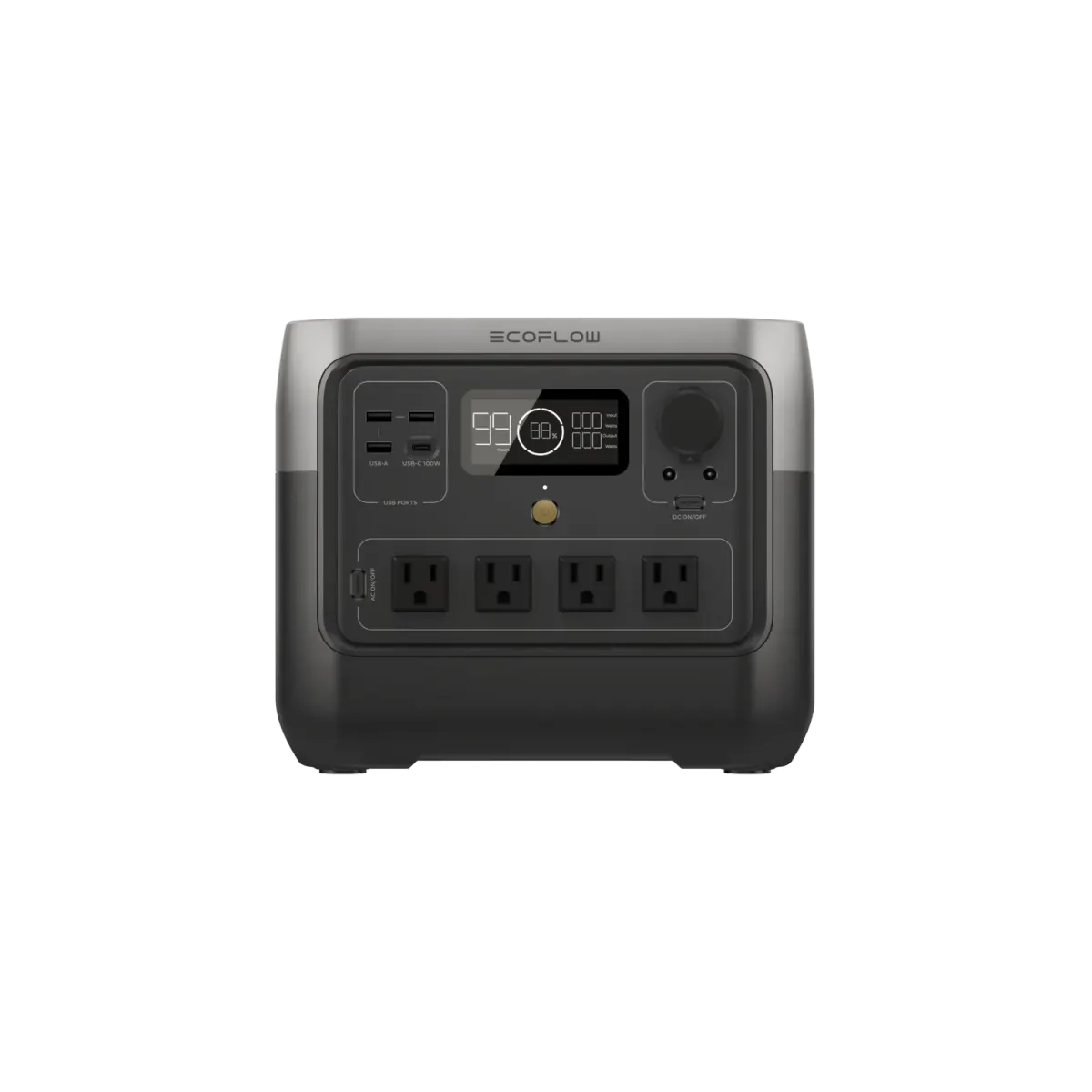 EcoFlow RIVER 2 Pro |
|---|---|---|
| Capacity | 677 Wh | 768 Wh |
| Continuous output | 600 W | 800 W |
| Weight | 20.3 lb · 9.21 kg | 18.2 lb · 8.26 kg |
| List price | $699.95 | $389.00 |
| UPS | Not listed | No |
| Cycle life | 4000 | 3000 |
| Solar input | 200 W | 220 W |
| Expandable | No | No |
| Score | 8.3 | 8.7 |
| Spec | 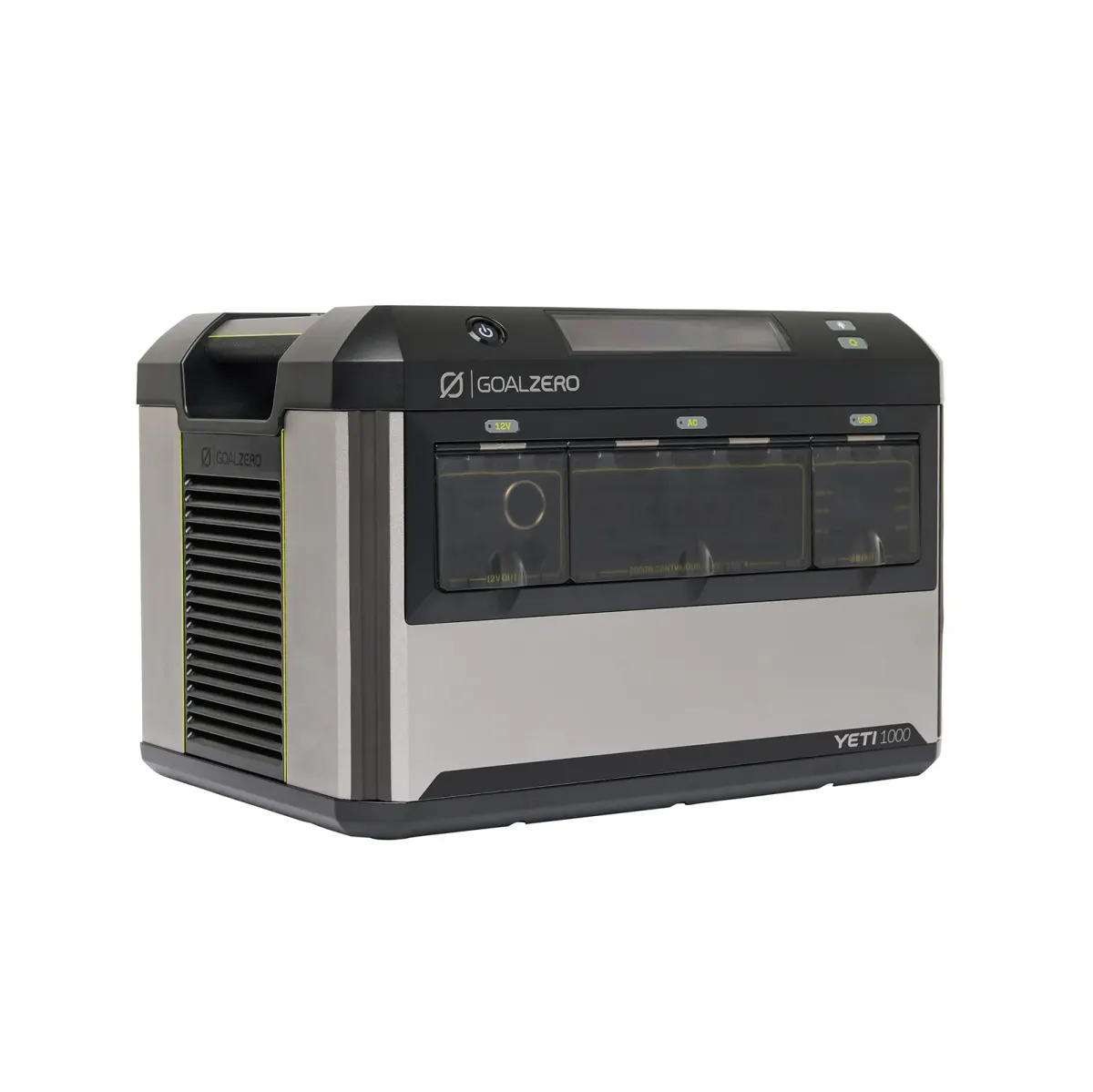 Goal Zero Yeti 1000 | 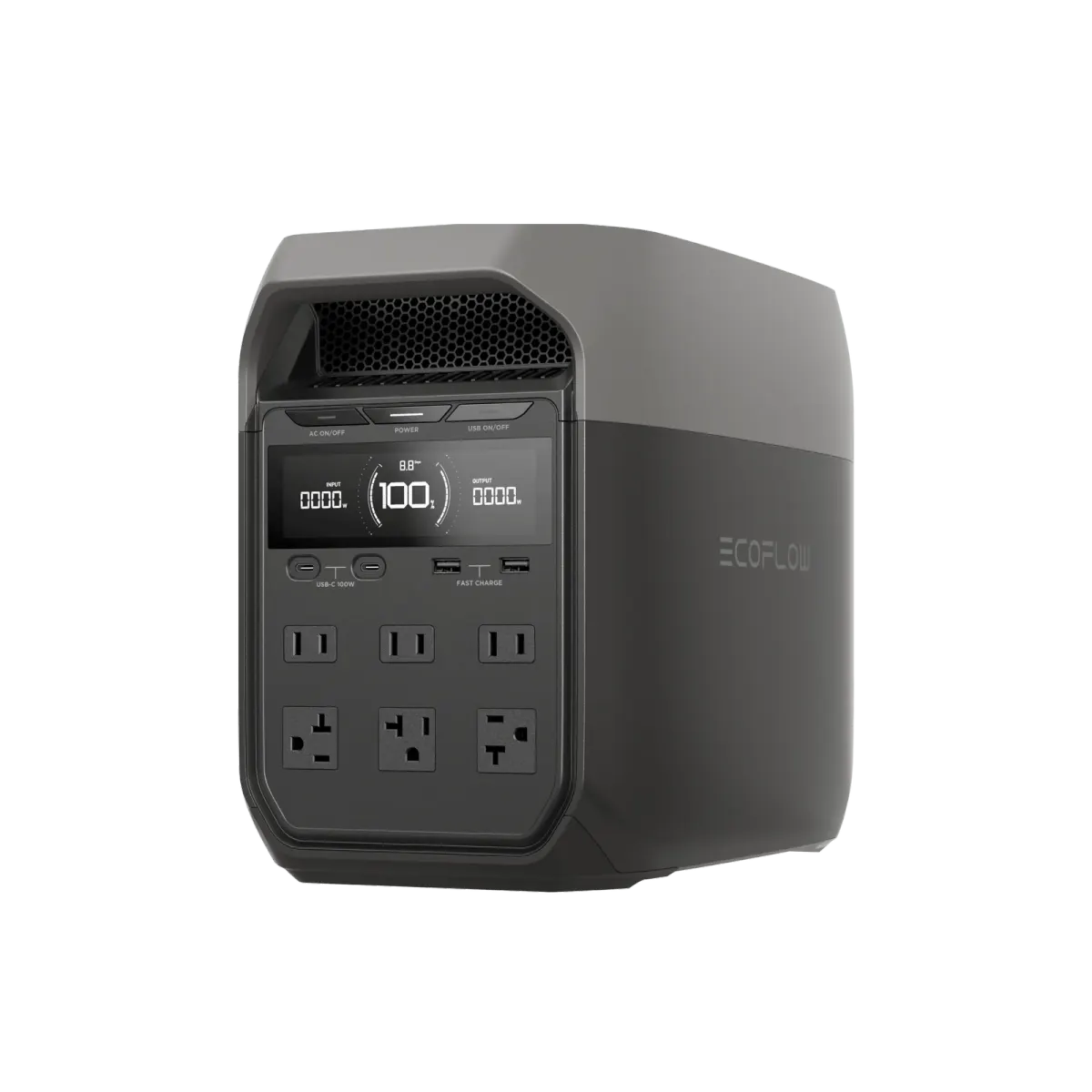 EcoFlow DELTA 3 |
|---|---|---|
| Capacity | 998 Wh | 1,024 Wh |
| Continuous output | 2,000 W | 1,800 W |
| Weight | 35.3 lb · 16.01 kg | 27.6 lb · 12.52 kg |
| List price | $1,199.95 | $629.00 |
| UPS | Not listed | Under 10 ms |
| Cycle life | 4000 | 4000 to 80% |
| Solar input | 900 W | 500 W |
| Expandable | No | Yes |
| Score | 8.5 | 8.8 |
| Spec | 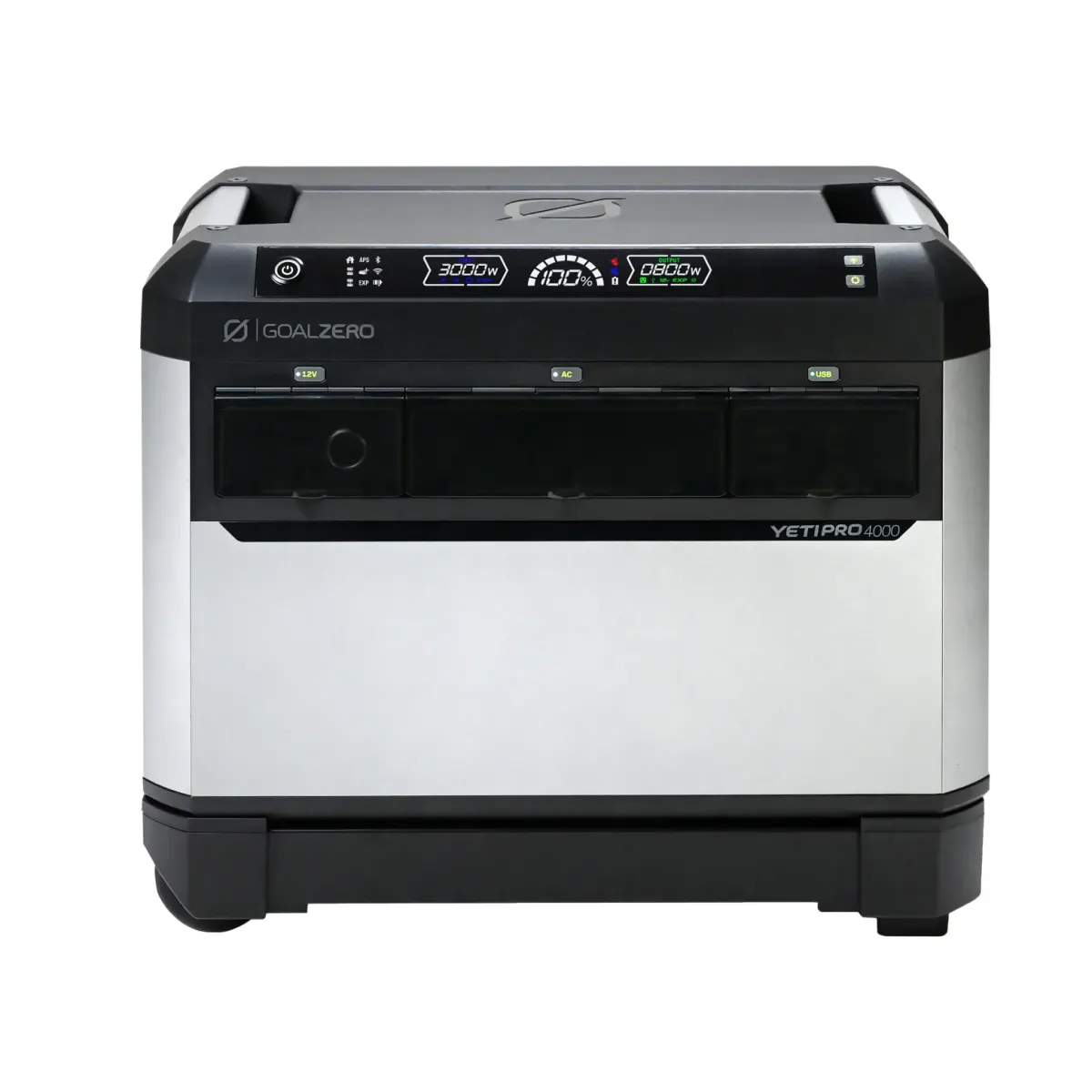 Goal Zero Yeti PRO 4000 | 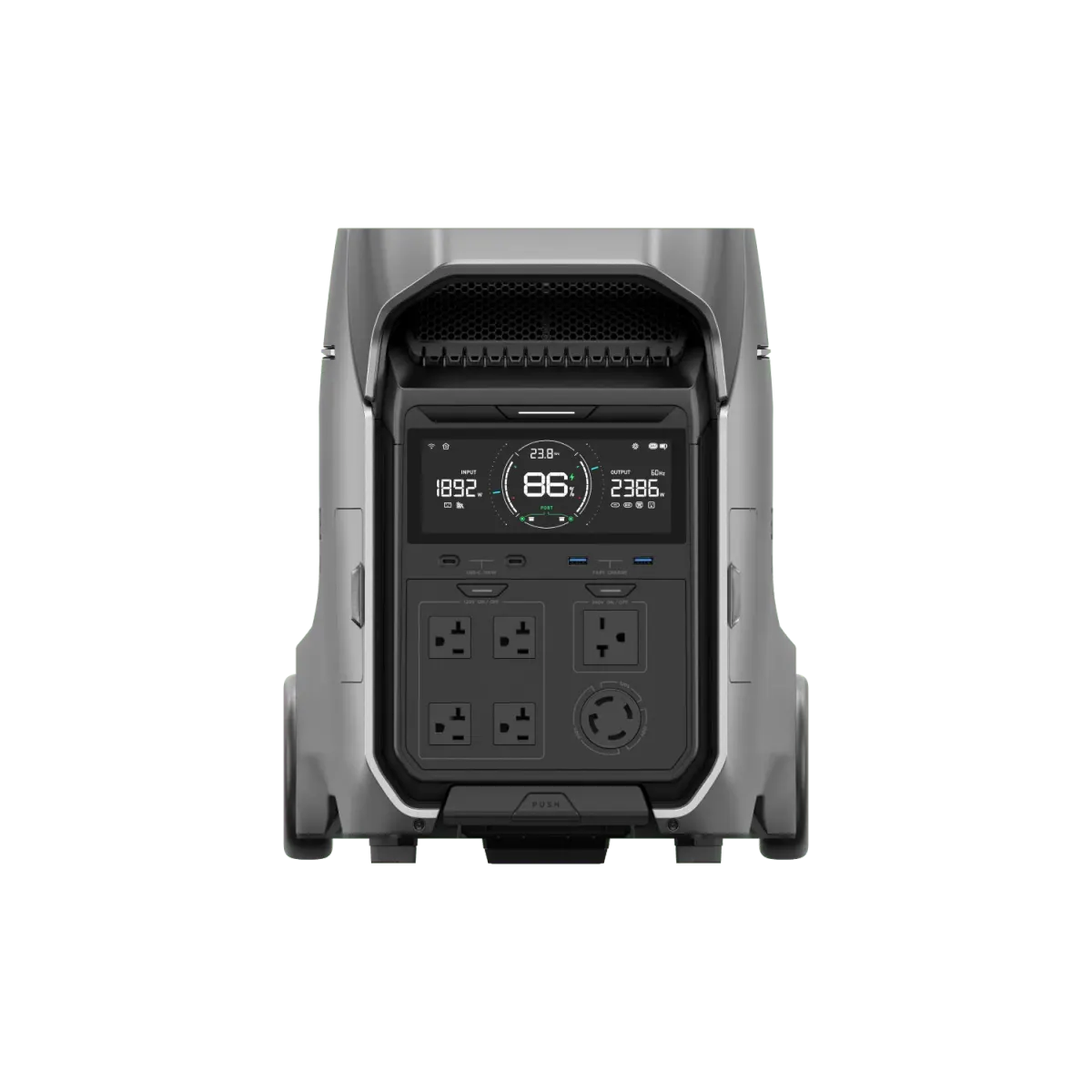 EcoFlow DELTA Pro 3 |
|---|---|---|
| Capacity | 3,994 Wh | 4,096 Wh |
| Continuous output | 3,600 W | 4,000 W |
| Weight | 115.7 lb · 52.48 kg | 113.5 lb · 51.48 kg |
| List price | $3,999.95 | $2,799.00 |
| UPS | Not listed | Under 10 ms |
| Cycle life | Not listed | 4000 |
| Solar input | 3,000 W | 2,600 W |
| Expandable | Yes | Yes |
| Score | 8.9 | 9.1 |
Figures from each model page. UPS and cycle claims are brand figures.
What should I check before I buy?
- Similar watt-hours. Put Yeti 700 next to RIVER 2 Pro, or Yeti 1000 next to DELTA 3 — not a trunk camping box next to a floor home-backup unit.
- What you pay, lift, and can grow. EcoFlow often undercuts on price or pounds, or prints a second battery; near 1,000 Wh Goal Zero often prints more continuous watts or more solar input.
- Cycle percent and UPS time. Keep the percent the brand printed. A blank on our page is missing data — not the same as “no.”
Questions
Is Goal Zero better than EcoFlow?
Not from the brand name. Match watt-hours first. You often pay less and lift less with EcoFlow, or you get a second battery; near 1,000 Wh Goal Zero often prints more continuous watts or more solar input. Open the two model pages you are actually choosing between.
Goal Zero Yeti 1000 or EcoFlow DELTA 3?
Both sit near 1,000 Wh. Yeti 1000 lists 2,000 W, 35.3 lb, solar up to 900 W, a bare 4,000 cycles, UPS blank on our page, and $1,199.95 (2026-10-31). DELTA 3 lists 1,800 W, 27.6 lb, solar up to 500 W, UPS under 10 ms, 4,000 cycles to 80%, a second battery, and $629 the same day. Haul and grow with the EcoFlow; solar and a 2,000 W ceiling with the Yeti.
Goal Zero Yeti 1500 or EcoFlow DELTA 3 Max?
Different watt-hours — about 1,505 Wh on the Yeti 1500 and 2,048 Wh on the DELTA 3 Max — so do not treat them as the same size. The Max stores more energy and lists more continuous watts at a lower list price on our catalog; the Yeti 1500 lists more solar input (900 W against 500 W) and prints 4,000 cycles to 80% while the Max leaves cycle life blank on our page. Match watt-hours first, then open the two model pages.
Do both brands use LiFePO4?
Yes on the Goal Zero Yeti and EcoFlow models named here. Chemistry is not the split you feel — watt-hours, watts, weight, price, solar input, a second battery, and the cycle claim are.
Updated 2026-10-31. Specs, UPS times, cycle claims, and list prices come from the model pages (checks on 2026-10-31 as noted). OutdoorGearLab usable-AC figures are cited where a model page records them. We have not re-timed switchover or re-weighed units. If a number looks wrong, write through About.
In this note
Open a review or a model page for the score and the specs.
Reviews 3
- ReviewBest Portable Power Stations Under $1,000Models with a brand list price of $1,000 or less on the day we checked. If we couldn't confirm the price, or it's over $1,000, it's not here.
- ReviewBest Portable Power Stations for CampingCamping picks, judged on capacity, output, weight, and solar input. An outside watt-hour test appears only when we have the link.
- ReviewBest Portable Power Stations for Home BackupHome backup picks that list expansion. We looked at capacity and continuous output. A UPS time appears only when the brand lists one.
Models 6
- ModelGoal Zero Yeti 10008.5 / 10 · 998 Wh · 2,000 W · 35.3 lb · 16.01 kg · $1,199.95
- ModelEcoFlow DELTA 38.8 / 10 · 1,024 Wh · 1,800 W · 27.6 lb · 12.52 kg · $629.00
- ModelEcoFlow RIVER 2 Pro8.7 / 10 · 768 Wh · 800 W · 18.2 lb · 8.26 kg · $389.00
- ModelGoal Zero Yeti 7008.3 / 10 · 677 Wh · 600 W · 20.3 lb · 9.21 kg · $699.95
- ModelGoal Zero Yeti PRO 40008.9 / 10 · 3,994 Wh · 3,600 W · 115.7 lb · 52.48 kg · $3,999.95
- ModelEcoFlow DELTA Pro 39.1 / 10 · 4,096 Wh · 4,000 W · 113.5 lb · 51.48 kg · $2,799.00
An editor chooses what is listed, fact check matches specs and prices to the source, and a page editor reads the page and handles corrections. About
Related reading
DJI Power vs EcoFlow
Anker SOLIX C1000 vs Jackery 1000
Goal Zero vs Jackery
BLUETTI vs Anker power stations
Anker vs EcoFlow power stations